
Steamed eggs for dinner
Three ingredients, three steps

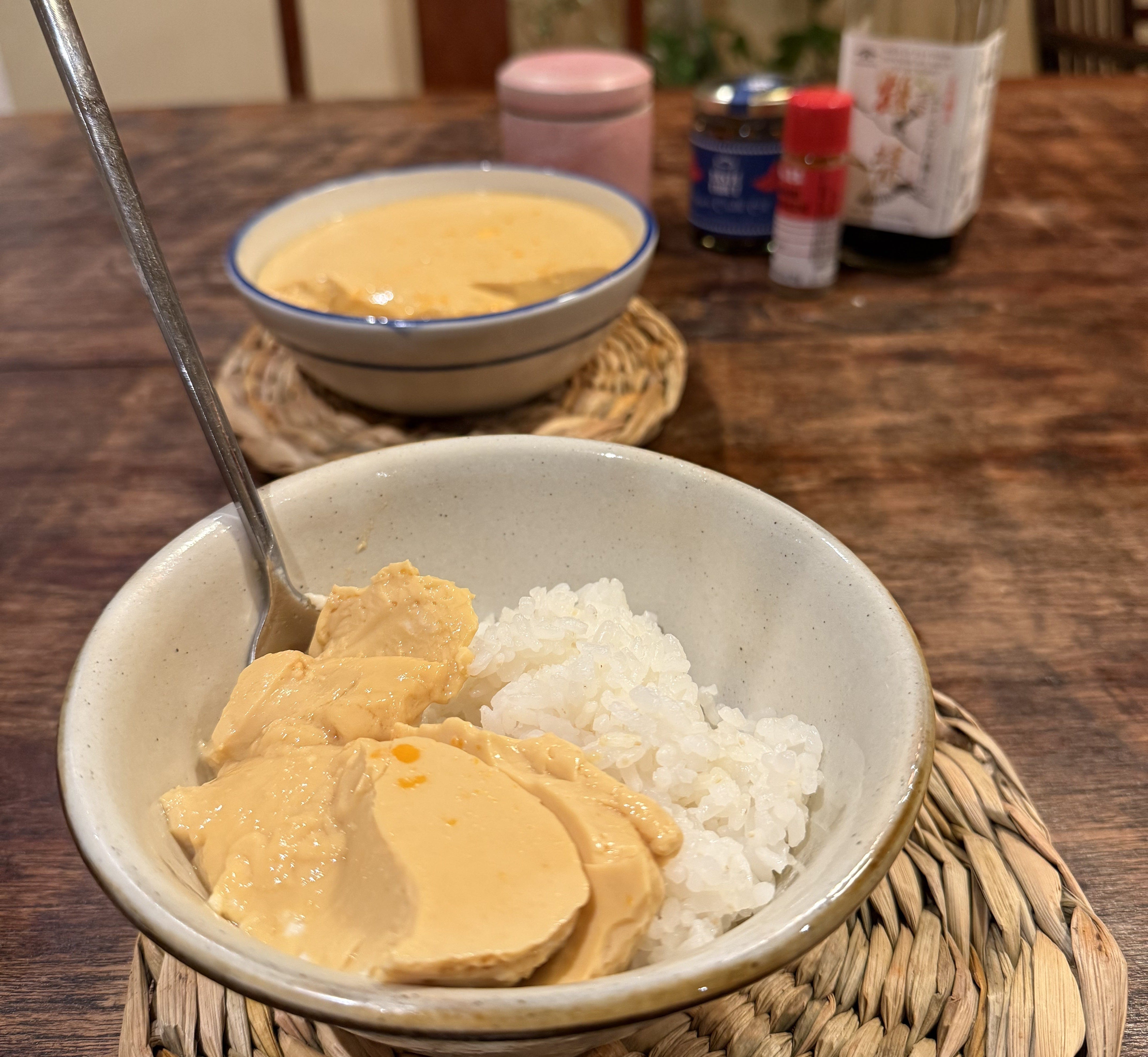
Being a small household doesn’t seem to stop us from buying 30-egg trays from the local farm. Eggs are versatile enough for any time of the day and everyone’s palate. They can transform from raw to cooked with both ease and haste. Having a kid has trained me to get dinner ready in about 20 minutes on weekday evenings. In these colder months, we especially like a simple, warming egg custard.
I was making this dish the other night when, seemingly by telepathy, my sister-in-law suggested that I might write something about it. So here’s a story in the different form of a recipe. Clare is a great chef—when we see each other, the pleasure of eating what she cooks is matched only by that of joining her children in mischief-making. Occasionally I sub in to cook and this dish is often involved, since it goes with almost any East Asian menu.
Steamed eggs are a common dish across Chinese, Korean and Japanese cooking. They can incorporate ingredients across the board—from mushroom to pork and seafood, from shiso leaf to spicy fried shallots. They can be found towards the end of kaiseki or as part of a 15-course Cantonese banquet. They also feature at home, and that’s where I’ve had the most memorable versions.
I’m going to describe the pared-down (though no less delicious) version of the dish, the basis for almost unlimited variation. As with the simplest cooking, making this involves tinkering with the details: ratios, the size and thickness of the bowl, the heat required for the gentlest steam. Because texture is everything, timing is everything. Make this a few times and you’ll develop a new and intimate understanding about the personality of each bowl in your kitchen.
The dish in three steps:
Prepare the broth. The broth’s flavour sings through the eggs, so choose your favourite. I often make this dish with dashi, which has a seaweed and seafood base. If I want furikake as a topping, I start the broth with dried kombu in the morning and let it rest. On busy days, I make broth with a dashi teabag when I get home. I also like the version of this dish with chicken stock. For best results, move onto step 2 with broth that is warm but not hot. (And to prepare for step 3, start heating water in the steaming vessel.)
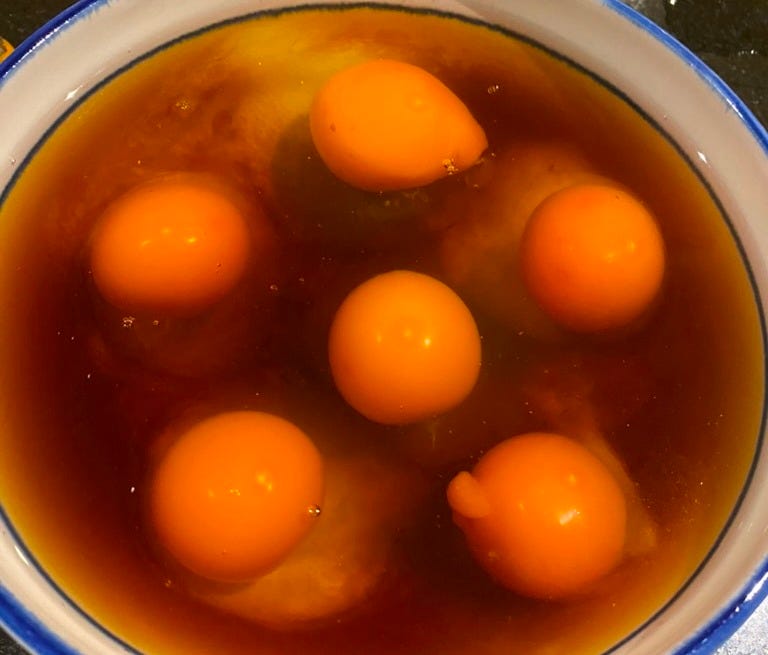
Stir the eggs. The ratio of egg to broth is about 1:1.5. I combine the ingredients by eye. When I started making this regularly, I often overestimated the number of eggs that would fit in my bowl. Mix the three ingredients: eggs, soy sauce, broth. This is also the step to add any ingredients you want to cook within the custard. After experimenting with expensive soy sauces, I’ve returned to Lee Kum Kee’s light soy sauce, the Cantonese kitchen staple.
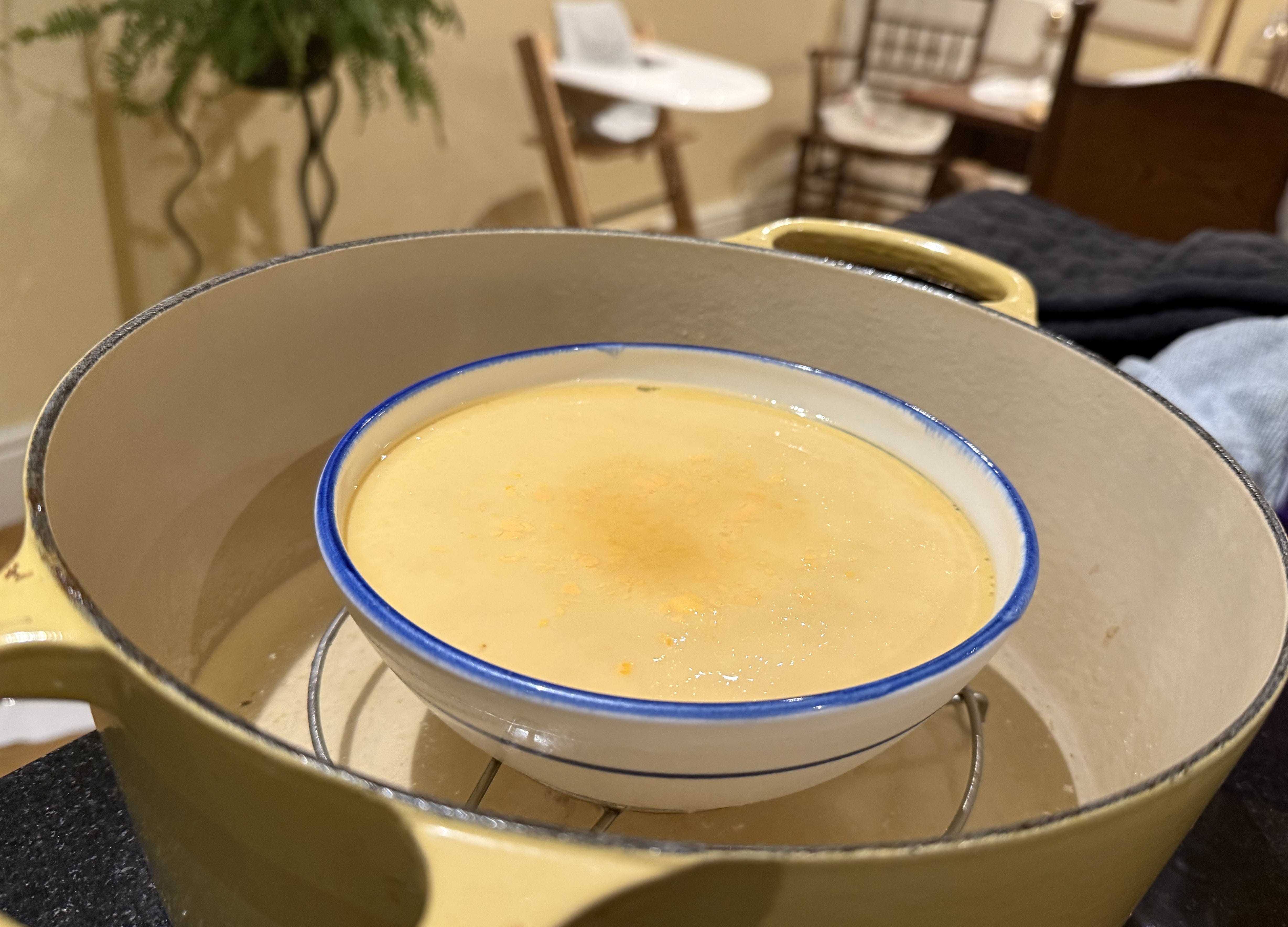
Steam. When the water in the steaming vessel is at a simmer, pop in the steaming rack (or improvise with balls of foil). The eggs then go on top. Calibrate the heat to maintain the gentlest simmer, where the bubbles slowly and lazily puncture the surface. Let the eggs cook evenly in a light blanket of steam—the edge should have the same consistency as the centre. Cover the pot/steamer. How long this step takes depends on your bowl, how many eggs you’ve used, and the exact degree of heat you are applying. I usually check after 7-8 minutes, prodding the custard with a fork, and every minute thereafter. Give the dish a few minutes to breathe and rest, then dig in.
The dish isn’t technically difficult, but it asks that you pay attention to how each ingredient works. Eating these eggs is as comforting as slipping your hand into a soft glove on a winter evening, and cooking them multiplies the warmth.
One question is whether to steam the eggs in one bigger bowl or several smaller ones. I do both. It depends on what equipment is available and who I’m cooking for. Smaller bowls allows for customisation without adding time. As I write this, I have a new idea for an activity to do with Clare’s four kids. They can each choose ingredients to add and we’ll have a whole tasting menu of steamed eggs. Impatient children can make us more efficient. Or we can come full circle—slow down and fold them into an afternoon of cooking. ‘Nephew dinner’!
Lucas’ eggs are one of my favorite things to eat